How Discord Embeds Social Learning to Study Community, Participation, and Inclusion
1. Platform Choice & Justification
Discord is a communications platform. Most people associate Discord with gaming, but there are also many servers for education, music, etc. In each server, there are channels to discuss specific topics. In each channel, you can post messages, send images, links, and ask questions.
I decided to write about Discord because I am active in three different music-related Discord servers: Classical Music, Bach’s Kingdom, and The Composers Network. I am a university music performance major, and I am interested in ways that musicians can learn about music outside of formal lessons and rehearsals. My analysis of Discord and how it supports learning in communities will also describe the limitations of online communities that form informally in order to have discussions, recommend things, and share examples of musical knowledge.
Analytical Framework
I applied three course frameworks and one additional concept to evaluate Discord.
Universal Design for Learning (UDL): Using CAST’s UDL Guidelines for Reviewing Multimodal Access and Sharing to Musical Knowledge and Possible Barriers for Learners in Discord.
Community of Inquiry (CoI): The Community of Inquiry model describes the core elements of online learning, namely cognitive presence, social presence, and teaching presence. Can members develop an understanding of each other in the Discord environment, build relationships, and be guided by each other?
Bates’s SECTIONS model: This model goes through a number of different factors, such as students, ease of use, costs, teaching functions, interaction, organizational issues, networking, and security and privacy, when looking at features of online tools. I focus on organization and communication within Discord in this section.
Digital identity and participation: A consideration of the extent to which confidence and experience in using this environment can influence participation by learners and/or support the knowledge of some over others within a community.
3. Platform Analysis
Learning through discussion and examples
This screenshot contains a good example of how learning can take place by means of a discussion in the music-discussion channel. In this discussion, a member explains that a C major chord written in root position has a C. The other members, including yourself, can then ask questions or make comments concerning this topic, including asking questions about chord inversions. It is also very good that you have worked this out yourself in the end.
This screenshot contains the same conversation for learning through discussion and examples, as mentioned above. The member who posted the piano video performance for learning a cadence received reactions from other members.
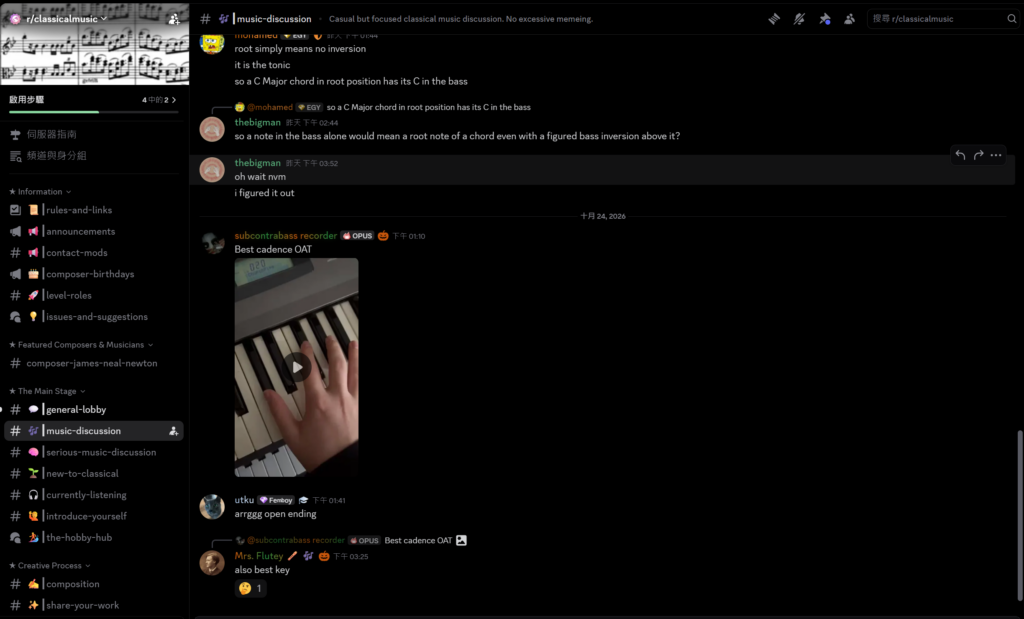
Figure 1. Above we can see the way that members of the Classical Music community engage in discussion of music theory and respond to the sharing of a piano performance of a musical cadence in the classroom.
There is evidence here of the cognitive presence of the community of inquiry. As mentioned previously, the question about chord inversions in a C major chord led to an explanation by others and understanding on the part of the questioner. The ‘like’ comments, etc. on the video for the piano performance also indicate social presence. However, the comments did not prompt any deeper analysis of the performance or indeed structured discussion of the video, which could have formed the basis of some really good learning.
Peer learning and musical recommendations
A good example of how peer learning works is found in a music-theory channel from The Composers Network, screenshot above. The poster there wants some Baroque scores to practice and has already gone through works like Bach’s Double Violin Concerto, Vivaldi’s Four Seasons, and Corelli’s Concerto Grosso in C minor, Op. 6, No. 3. He plays basso continuo on cello.
One recommends Bach’s Brandenburg Concertos and Beethoven’s Great Fugue because studying fugue can help learn counterpoint. He also recommends Bach’s violin sonatas and partitas, The Art of Fugue, the Goldberg Variations, and the B minor Mass, as well as Scarlatti, Telemann, Rebel, and Rameau. The original poster is looking for things to help him with his writing in a Baroque style and learning to play basso continuo on cello.
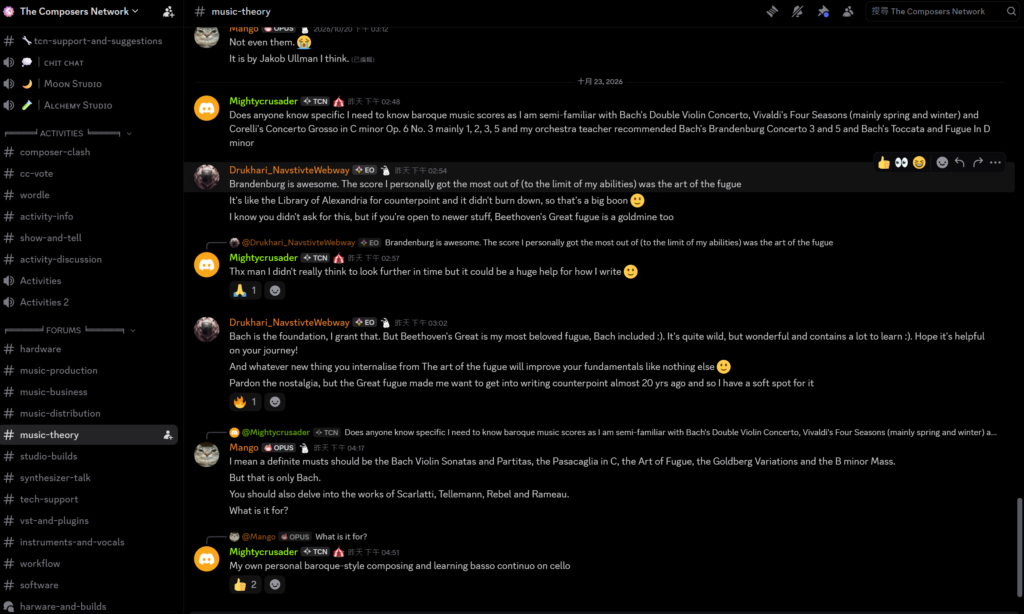
Figure 2: Members have been given recommendations of scores of Baroque period works to learn basso continuo on cello
There are a number of positive features about this exchange using Discord for social learning. Firstly, the advice is to learn from the point that the learner is at and not to have to start from scratch as a complete beginner. Secondly, there is more to the exchange than just a list of pieces for the learner to practice. There is an explanation of how studying counterpoint could help the learner’s musical development. Finally, by asking about the learner’s purpose for their writing, the advice is kept relevant.
The recommendations may help the learner in their writing. As stated above, this example of interaction in The Composers Network shows cognitive presence in terms of the members exploring musical resources with potential for musical education. There is also teaching presence from the more experienced members even though no teacher is formally present.
The advice given is informal, and the learner has to use their own judgment in relation to the quality and relevance of the music and in relation to their own ability to tackle the work suggested. They have to assess the usefulness of the contributions of their peers.
Accessibility, organization, and participation
Having multiple formats of information to learn from is beneficial, and learners with different learning styles can benefit from text explanations of concepts combined with recordings and/or videos of examples of those concepts in music.
Having many formats does not necessarily mean that it is accessible. There may be parts of the resource that will be difficult for novices to understand because of the use of theoretical terms. The useful parts of the explanation may get lost in the rest of the very active channel. As there is no consistent and logical structure to a course in Discord, the community has to build it themselves.
4. Reflection & Implications
From exploring how music theory learning can take place in Discord spaces, such as clarifying music theory, sharing student compositions, getting recommendations for more music to learn, and learning about specific musical terms and their uses in the space of musical concepts, the Composers Network example of peer advice given in relation to the learner’s goals for their own music is particularly insightful. The space of Classical Music sharing also combines discussion of music with experiences of sharing and enjoying musicals of all styles.
By reducing the barriers to access and by providing multiple means of access, engagement, and expression, UDL offers new avenues for teaching and learning. The Community of Inquiry model outlines the following conditions of learning which must be met for meaningful online learning to occur: cognitive presence, teaching presence, social presence, and facilitating presence. Bates’ SECTIONS model highlights the need for the educator to consider the support that a learning environment affords and whether that environment’s design actually supports the intended learning.
It seems that more proactive learners can receive value from the interactions in Discord, unless they are not very good at asking questions and evaluating advice from others. Less experienced members and those who are not as confident may require more elucidation and encouragement to obtain the same amount of value from participating in the community. These lessons can be applied to other social learning platforms. Having access to information is not the end of learning in these environments. Rather, learning meaningful things occurs when learners have opportunities to question, evaluate, discuss, and apply what others have shared.