Community Contribution #2 – Analyzing Your Digital Identity
My online identity: “Julian Lao” and “Chi Ieong Lao”
A simple search revealed that my public online footprint is relatively small. What is online relates to music. Examples of my online identity include a UVic concert program listing for Julian Lao (bassoon) with the University of Victoria Symphony Orchestra, as well as concert programs from various youth orchestras listing Julian/Chi Ieong Lao. Interestingly, these concert programs help to create a professional online identity for me, even though I did not create the online content myself.
To get a sense of how GenAI would summarize who I am based on my online identity, I recently asked it to summarize who I am. What it provided in terms of summary was primarily that I am a student, a bassoonist, and an emerging musician. Note that this summary was developed from very little online content that is publicly available about me. Interestingly, from these few fragments of information online, a professional online identity for me as a bassoonist had been constructed. However, my online identity is not entirely within my control. Others, including universities and ensembles, as well as search engines, all contribute to the online identity that becomes associated with my name online.
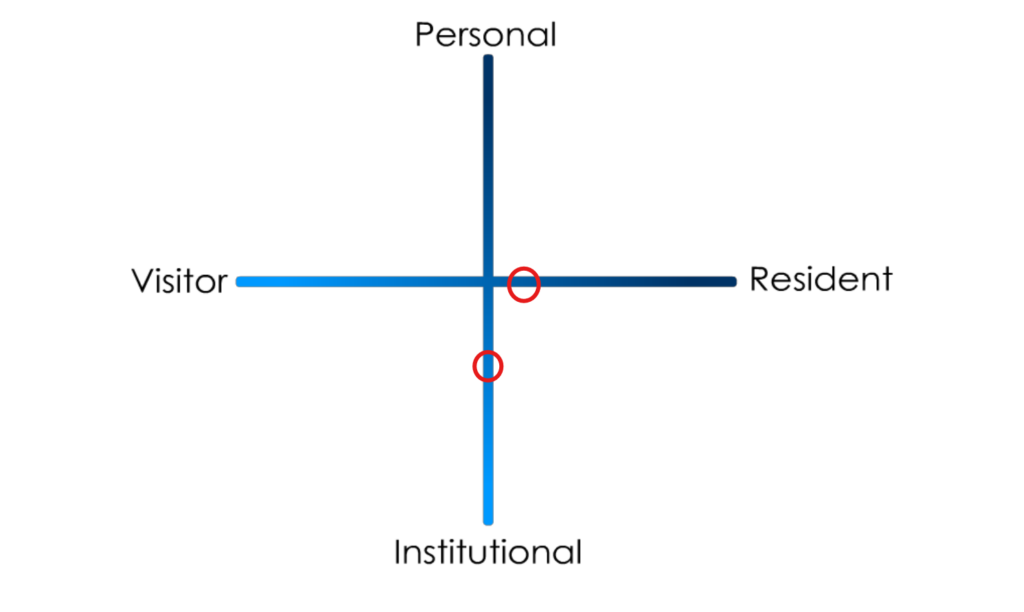
My online identity shifts between that of a visitor and a resident depending on the context in which I am online. As noted elsewhere on this website, my online identity is also further influenced by information that I share online as well as by information that others share about me online. Therefore, to manage my online identity, I must also consider privacy and surveillance online.
How much should we shape a professional digital identity?
In my opinion, I think we should be intentional in building our professional digital identity. We should not try to control every aspect of our online presence. Rather, they should strive to be very intentional with regard to the core of their online presence and then allow their identity to naturally evolve. This balance will allow them to have a solid professional identity online while still maintaining authenticity and allowing room for growth and evolution in their identity over time.
I would therefore view the professional digital identity of students as intentional direction and natural development. They deliberately establish and develop a professional online presence, but it changes as they learn, get to know new people and discover new things of interest.